
The Islamic State occupation of the Sinjar area of Nineveh province was one of the cruellest committed by the terrorist group. The Islamic State singled out the Yazidis in an effort to destroy their culture, killing an estimated 5,000 and enslaving a further 6,500, many of whom were women and children. Although the Islamic State was expelled from Sinjar in late 2015, residents of Sinjar still make a significant proportion of Iraq's internally displaced population. Much of the area remained uninhabited due to it being badly battle damaged but also because of the presence of explosive hazards, which prohibited the return of the displaced population.
Sinjar Case Study
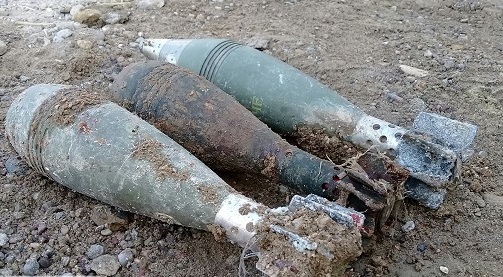
background
In December 2019 G4S was awarded a 12 month contract by UNOPS on behalf of UNMAS Iraq to provide Explosive Hazard Management and Risk Education in Sinjar, Iraq.
Under the supervision and mentorship of a small team of G4S international staff, a total of 38 nationals, comprising of twenty Yazidi females and eleven Yazidi males from Sinjar, were recruited and trained to search and subsequently deal with any explosive hazards they came across. In addition to this the team also delivered Risk Education to the local community especially focussing on behavioural change to the at-risk population and returnees, so they could continue their lives in a safe manner.
Outcome
Due to the efforts of our teams we were able to assist in rehousing families and rebuilding communities. Some of the towns and villages helped were the very same ones our teams had lived in, providing these team members with a profound sense of pride in what they were achieving.
Some of the critical tasks completed included infrastructure facilities which although badly damaged had to be made safe from explosive hazards prior to reconstruction. Of particular importance was the water supply system to a village where most of the piping has been damaged and the pumps have been removed, but everything had to be painstakingly searched and cleared before reconstruction could begin. The main electricity sub-station on the outskirt of the village was another priority task, which was cleared and can now be safely refurbished.
Specific achievements during the Sinjar project included:
- Conducting 43 separate tasks
- Clearing 620,823 square metres
- Delivering Risk Education to 5,238 personnel
- Disposing of 31 Improvised Explosive Devices
- Disposing of 232 various items of Unexploded Ordnance
Services Delivered
- Explosive Hazard Management with Risk Education (plus mechanical support)
- High Risk Search (HRS), IED Disposal (IEDD) and Explosive Ordnance Disposal (EOD) Teams to identify and render safe a wide range of explosive hazards
- Non-Technical Survey (NTS), Community Liaison and Risk Education (CL/RE) teams to work independently from the main team, conduct NTS, in support of subsequent HRS, IEDD and EOD operations for Suspected/Confirmed Hazardous Areas (SHA/CHA) or spot tasks
- Conduct CL/RE to local populace or as directed by UNMAS Iraq
Method
Due to Islamic State’s sophisticated use of explosives, our teams were trained on a wide array of Explosive Remnants of War (ERW) including sophisticated IEDs. We required a detailed understanding of how the conflict evolved in Sinjar and local knowledge of where ERW might have been placed or left.
To achieve this we needed to work closely with the afflicted communities to gain their trust and their insights so that we could develop a comprehensive picture of the explosive hazard threat. Conscious that this necessitated gender-balanced teams able to communicate appropriately with men, women and children, we took a further step and deployed all-female teams.
The women were all recruited from within the local Yazidi community and once they had completed their training and assessments were soon proving themselves to be extremely capable within their new role. This training allowed the woman to regain their self-confidence and they soon began to excel in their roles.
This gender diversity undoubtedly greatly contributed towards reducing the level of explosive hazard contaminant as it allowed G4S to speak to and deal with the community as a whole, which subsequently ensured we were able to gain a more in depth perspective on the explosive threats within the area.
An added concern was the ever present threat from Islamic State cells who were still operating within the region. Our teams were assisted with current information and analysis on security incidents and trends by our own Intelligence and Advisory Services team.